Showing posts with label Travels. Show all posts

Sunday, May 12, 2019


A few months ago, I had a work conference to go to early in the morning and so I rushed to the hotel, grabbed a plate of the hotel breakfast, and sat down to listen to the opening speaker. He was an Ironman athlete who had completed the extreme triathlon more times than I can count. Granted it was 7:30 in the morning and I was just beginning to wake up but I looked at him the whole time, deadpan. I ate my eggs, I'm sorry to say, rolling my eyes.


I know I shouldn't be so harsh  and I don't know why it irks me so much  but mainly I was just thinking about how refreshing it would be to sit down and listen to a motivational speech from someone more modest in their ambitions, perhaps steady or quiet or balanced. Since then I've watched Free Solo and The Dawn Wall and Homecoming and countless other documentaries of people achieving the unachievable and I walk away from so many of them thinking, can you ever achieve your dreams and still have healthy relationships with people you love and get eight hours a sleep a night? (Eh, probably not.)

To be fair, I loved the aforementioned movies and think people should pursue absolutely anything they want within reason I suppose but at that conference, I kept thinking that I wanted nothing more than a co-worker of mine to go up on stage and give a motivational speech. He lives in the woods of the Pacific Northwest and does his job just fine and looks completely inconspicuous but also like maybe he really has life figured out. I can't be sure but I feel like his speech would go something like, Hey, don't work yourself to death. 


That being said, I probably could benefit from the stories of accomplished athletes more than most. I told myself that I would be done with a second draft of my novel before I left for a two-week vacation to the Southwest last month and I failed to meet that self-imposed deadline. It's been six years since I started the first chapter of this novel and I'm still chipping away at itMy deadlines for the book are usually arbitrary and unrealistic considering the other things I have going on in my life (and the fact that I don't focus solely on this novel) so it's laughable that I didn't think it was going to take 6+ years. But still, that number: 6+ years. It's longer than I thought. 

In the end, the important thing is to see this thing through, which I will do, but I should knuckle down. I should just get this thing done but as someone with a slower, more "everything-in-moderation" demeanor, I can't help but be drawn to hard work and balance. A blessing, I suppose, but also a curse.


I am a writer, not an athlete, but in light of this post, it's interesting to note that I have recently moved to Salt Lake City, a city of outdoor enthusiasts, and have been dabbling in things I never thought I would. By my nature, I am drawn to the slow, steady activities of hiking and backpacking but I have also have been trying my hand at more extreme endeavors due, a bit, to my partner. Ever since the move, the riskier, more intense, more testosterone-prone activities of climbing and mountain biking and skiing have been pushing me past my limits, for better or worse.

Just yesterday, I was walking my mountain bike up a trail, huffing and grumbling, and thinking the thing I always think when I'm struggling: When is it good to push yourself? When is it good to just accept who you are? It seems a question there is no real answer to. It seems the question I am getting at.


Basically all of this rambling and lamenting to say, if I had my way, I think I would have invited a poet to be the opening speaker of the sales conference (can you imagine?) because you know what has been invigorating me lately? The words of Mary Oliver and Nikki Giovanni and Bernadette Mayer. The poetry of Tony Hoagland and essays of Robin Wall Kimmerer.

"I really don't think anybody ever listens to poets so it doesn't matter what you say," Nikki Giovanni said laughing in her interview with WNYC, and then added: "If they did, it'd be a whole different world." I can't help but agree, though I'm biased. 

I do hate posing questions and just leaving them there so I will end with this: I have learned a lot in the past year. I have learned, for example, that you can get over your fear of, and even enjoy, hanging from a forty-foot wall if you do it enough. I have learned that you can write a novel slowly and still, hopefully, get it done. 

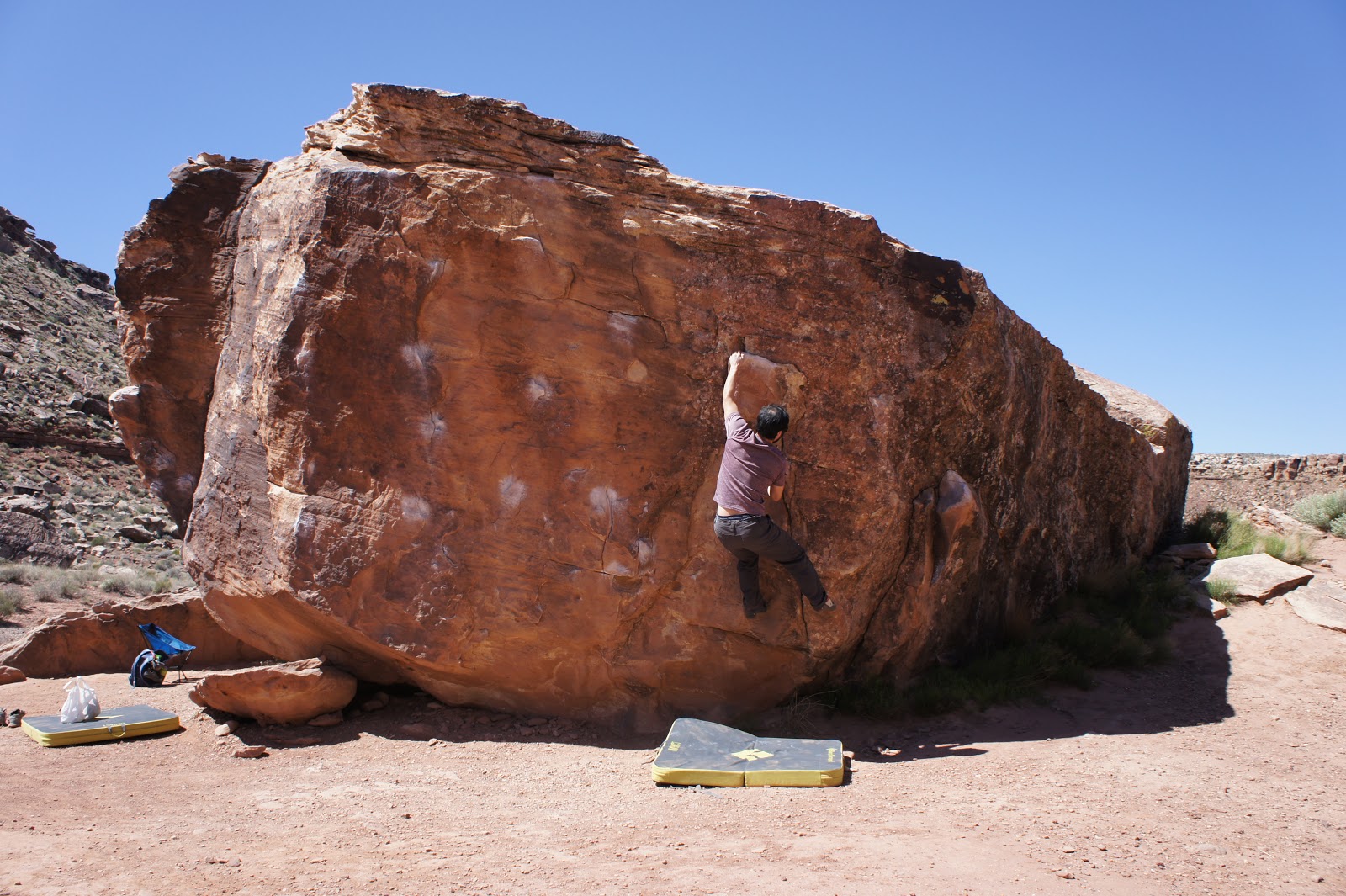
Pictured above: shots from a recent two-week long adventure through the Grand Canyon, Sedona, Santa Fe and Moab

Wednesday, April 18, 2018


So two weeks ago, I moved to Salt Lake City from Chicago (!). The move came after a few years of wanting to live somewhere new, preferably somewhere with access to the outdoors. I like the city a lot actually, from what I've seen so far. I like the cute neighborhoods and the mostly blue skies and the mountain views in every direction. There are things that are lacking, like public transportation and an abundance of restaurants on par with those in Chicago, but I will deal just fine.


Right before moving, a funny thing happened where I ended up stumbling on old journals from high school while I was cleaning under my bed. I stopped packing for a second to read through them and was quickly reminded of my younger, even more idealistic self. The journals were filled with nomadic dreams, notions of radical environmentalism and mostly, a lot of Bush era despair. There was a part of me that wanted to drop everything after sifting through them and travel without aim and live among the train-hoppers but then I thought, what would I do about money and health insurance and the existential feelings that come when I wander with no idea of where I am going?


I am not as radical as I hoped when I was younger but oh well, I've come to find that, like most, I actually enjoy routine and stability. I like creating my own home and a consistent paycheck and luckily, a bit of disposable income for hobbies and travel plans and donations towards things I would like to see come about in this world. I'm 27 and don't have a MFA or any published work but I do have words that I have written and a belief that maybe I actually prefer writing without publishing. For now, that feels like enough.

And in terms of travel, I love seeing new places (preferably thoroughly) but I like my career too. I was talking to a co-worker about this recently and realized that the European model really is my ideal, with its generous vacation policy. In a dream world, I would be able to work and be productive but still have the chance to wander for four or five weeks each year. (But of course, I've lived in Honduras and know the other side of the spectrum, that I'm lucky to have a job at all.)


I feel like I'm saying a lot of the same things I've said in previous posts but I guess the new surroundings have just reminded me again that life is good, even though it's not what I expected. I will be moving into an apartment and starting a new job in a few weeks and am excited and nervous and at times, conflicted. My life isn't exactly the narrative I constructed for myself when I was younger but I'm old enough to buck plans now, give up the idea of a set narrative and live instead as life comes (and yet I'm torn, is holding tight to a dream the only way I'll ever get there?).

My motto, it seems, always: oh well. Onward and onward.

Tuesday, February 27, 2018


My month in Mexico has almost come to an end. It was different than expected. Usually I try to find a way to have built-in community whenever I travel solo, and for this trip, I thought there would be other artists and writers working on their projects alongside me but it looks like I should have done a bit more research regarding my accommodations (I was swayed by the B&B's pretty pictures and semi-reasonable price I guess). It turns out more artists come in the summer and so what I came down to find was along the lines of the Best Exotic Marigold Hotel, i.e. a bunch of American retirees who had traveled south for the winter.

The group was a wonderful, eccentric bunch, all dressed in huipiles (which I have weird feelings about but generally think I'm okay with). They spent their days laughing and shopping and inviting me over for a margarita from time to time. But since they weren't really the type of group to go out at night, I missed out on exploring Oaxaca's nightlife and meeting some locals my age. No matter, what I ended up getting in return was a month with very few distractions, a rough draft of my novel done, a lush garden and sunshine out my door, and a small yellow room to call my own.

All in all, it was a success, although at times a solitary one. I'm ready to go back home and give my novel some space to breath while I figure out what's next. Still, my heart aches a little as I leave this charming, noisy, earthquake-prone town. I'll miss Oaxaca, inevitably, like I do with all things when I leave them.

Sunday, February 11, 2018


I have been in Oaxaca for about two weeks now and must admit, I've become a bad tourist. There is much to see and do and eat here but I've found myself forgetting to explore, mainly writing, reading and wandering off when I need food. To be fair, I came here to write so there should be no guilt there but of course, in my mind guilt and anxiety always find their way in. 


Which leads me, I guess, to a fun story: a few days before I left, I had a scare that my arm was at risk for paralysis. It was my last week of work and I was frantically tying up loose ends, finishing up every project I could while also ignoring the fact that I was about to solo travel down to Mexico in a few days, and all of sudden my arm went numb. Fully numb.

My initial diagnosis was that it was due to the fact that I had cut my wrist while doing dishes a few days earlier. A ceramic plate broke in my hand while I was washing it, and I was worried that the plate had dug in, hitting a vital nerve. But after a trip to the doctor's, I realized that no, it was just too much computer use and most likely, anxiety. In all of my years, I've seen my fair share of ways in which anxiety can manifest itself but that was definitely a new one for me.


Now that I'm here, I'm trying to be anxiety-less. Honestly, it's almost absurd to have any anxiety, being that I'm able to spend a month writing in 80 degree weather. But talking to other writers here, I see it everywhere. The anxiety that you're not writing enough. The anxiety that you're not enjoying yourself enough. 


An interview with Chicago author, poet and sociologist Dr. Eve Ewing stumbled into my inbox this week and summed it up so well. Her motto? "I always forgive myself for what I'm not doing."

"This is really dramatic," Ewing later says, "but when I finished my dissertation at two in the morning in my house in Boston, the very first thing I thought about was Harriet Tubman and slavery. I burst into tears. And I was like, 'I just finished my dissertation, and my ancestors were enslaved and if they tried to read people would punish or murder them! And they were ripped apart!' That was straight to where my mind went. I also was extremely sleep deprived. But you know, when you get that perspective, it's like, 'Uh, yeah, I got it pretty good.'"

So as of right now, I'm channeling Ewing, forgiving myself for whatever I'm not doing, being as easy as I can on myself, acknowledging that I've got it good. I've picked an achievable daily writing goal and every day, I do it. I am here, I am fine, I am writing! It is sometimes torture but it is also sometimes pure bliss.

Saturday, January 27, 2018


I suppose these are a bit late but I wanted to write down my resolutions for next year mainly as a way to remind myself to keep coming back to them, even if I let myself slip a few months in. They are realistic resolutions (my favorite kind); small in scope, do-able and yet somehow they'll still take a bit of dedication to keep up with. So without further ado, 2018 will be the year I ...
1) Finish my book (My motto for this year: I don't care if it's any good, just that it's done.) 
2) Join a writing group 
3) Read at least 25 books (and one in Spanish)
4) Continue rock climbing / salsa dancing
5) Keep up with this space here 
6) Call senators / representatives once a week (failing at this now but will keep trying to make it a habit) 
7) Floss every day 
8) Save what I can 
9) Join a CSA 
10) Bring a resusable water bottle everywhere I go (currently on a very slow journey to being less wasteful)
I would love to have a buy nothing year next year and just work at an aggressive savings goal but with a move coming up (details soon!) I know that it's not realistic for 2018. Regardless, for now there's lots to do, lots to look forward to, especially being that in three days I will be heading to Mexico for a month-long writing residency to work as hard as I can on goal number one. 

Of course there will also be plenty of moments this next month where I'm working less hard, drinking fresh squeezed papaya juice in the Oaxacan sun, which I am also very much looking forward to. Hasta pronto, friends.

Saturday, December 16, 2017


It's been a while since I've written here. In the past months, I put on an event for work to a rough degree of success, I struggled some days for many reasons (personal, professional, political), and I put down the pen for a little bit only to get really excited about coming back here.

Things are looking on the up and up these days, which makes me feel ridiculous that I felt like such a mess just a few months ago, but hey emotions, they are what they are.


In other news, did you know that Las Vegas is incredibly beautiful? I didn't, until I went there this past weekend to chase the sun and go on a climbing trip with my boyfriend for his December birthday. I don't want to speak too soon but after climbing with my boyfriend for the past year and a half, often times begrudgingly, I think I have finally caught the climbing bug. Those rocks above did it; and also maybe the realization that I can do things that I think I can't.


While my writing practice has waned these past few months, I have kept up reading as much as ever, and devoured Francisco Goldman's "The Interior Circuit: A Mexico City Chronicle" a few weeks back, deciding that it was my favorite book of the year. The book blends travelogue, memoir, and the political into one, which I think is a wonderful, perfect mix. The way he describes the country-wide grief in Mexico and how it simultaneously informs his own personal grief after tragically losing his wife is stunning.

A few years ago, I read Goldman's novel "Say Her Name," which chronicled losing his wife due to a swimming accident off the Pacific coast, and while it was beautiful, it was almost too heartbreaking to ever want to read it again. But as Goldman continues on processing his grief, his latest writing is a bit easier to digest (although the subject matter in "The Interior Circuit" is often just as dark). Some particularly gorgeous passages:

"Concentration and hours to write come more easily to me in the DF than anywhere else, especially when it rains. Time in Mexico City, at least to me, seems somehow slowed down, so that days feel twice as long as they do in New York. A mysterious energy seems to silently thrum from the ground, from restless volcanic earth, but it is also produced, I like to think by the pavement-pounding footsteps of the millions upon millions who labor every day in the city, by their collective breathing and all that mental scheming, life here for most being a steadfastly confronted and often brutal daily challenge, mined with potential treachery, but also in the best cases, opportunity, one sometimes hiding inside the other as in a shell game; also by love, desire, and not so secret sexual secretiveness, the air seems to silently jangle with all that, it's like you breathe it in and feel suddenly enamored or just horny; so much energy that in the late afternoon, I don't even need coffee."

"Though I will never be able to comprehend Aura's death, I do think I live with it now with less resistance, less corrosively, with less inner panic than before. Aura has her place inside me now, I told Nelly, though I hate that phrase and its false impression of gardened cemetery, neatness. What is Aura's place? Death and memory, never neat or orderly, always a forest and an ocean."

I mean, how perfect are those words?


In a few months, I will be off to Mexico myself for a month-long writing residency. I've been planning a trip to Mexico for a while now and am that glad it's working out, though there are many anxieties surrounding it (money for one, and also the fact that I'll be alone every day with my thoughts and a blank page. Fun!). Still, I'm excited for change and a new year and a few posts heading your way with more of my favorite writing of 2017.

Glad to be back.

Wednesday, August 30, 2017


I spent two weekends away this August; first going to Nordhouse Dunes in Michigan for a backcounty camping trip and then to San Francisco where my friends and I rented a cabin three hours north of the city. Both weekends were spent without much cell service, soaking up the August air in all of its glory before coming back to the heartbreaking news I had missed (first Charlottesville and then Hurricane Harvey). 

I'm still digesting both incidents. Still reflecting and trying not to let the nonstop news cycle keep me from taking some time to process and react.


In other news, I finally signed off my Instagram this month. 

I wanted to write something thoughtful and introspective about the move here but really I don't have much to say except that I'm happier without it. I can guess as to reasons why but I think in the end, it's a fairly simple conclusion. Scrolling through other people's supposed highlight reels is probably not good for the psycheThere are other things to do, other things to focus on ― plus I like getting updates of my friends' lives in real time, preferably at a kitchen table over coffee or tea.


While Michigan and California were lovely, most of my summer looked exactly like the shot above, in my air-conditioningless apartment, where my boyfriend and I spent our days, feeling content and lazy. My summer was full of work anxieties and a few breakdowns but it was also filled with quiet nights, where a 15 minute walk through side streets to get to my neighborhood Walgreens was a highlight in itself.

And so with that, another summer (almost) gone! I don't know how I feel about it quite yet but one of these nights, I'll pour myself a cup of mint tea and embrace the change in the air.

Thursday, April 27, 2017

I've written about my year abroad in Honduras a few times but earlier this year, I had an itch to say a bit more about the question I get asked the most when people find out I lived outside of Tegucigalpa: was it safe? This essay doesn't outright answer the question (the answer being: mostly, no) but it gives the long-winded answer that I would like to tell people if I had the time and the ability to articulate all of the nuance I saw. It's a longer post  feel free to also look through on my Medium page if that's easier  but if you have some time, I hope you enjoy.


Inevitably a Witness

I tried in every way to stifle the nerves that came with moving to Honduras at twenty-two but they still showed in unexpected ways. As a recent graduate, I flew down to Honduras to work for a year, and when I arrived in San Pedro Sula from Chicago, rushing to catch a bus five hours west to a tourist town near the Guatemalan border, the quick exchange from plane to taxi to bus had me feeling faint, with my heartbeat hastening. I told myself that it must be the altitude change coming from Chicago, still too young to realize the depth of my nerves. As I chatted with German tourists and found my vision start to blur, I did what most people do in times of physical unrest: I breathed in and out deeply and then when that failed to work, I searched my purse for pills.
All I had with me was Imodium. Although I had hardly eaten in the country, the placebo worked quickly. Once on the bus, I felt fine, comfortable even, talking to the man sitting next to me. Over the next few hours, we watched out the window as we passed houses that sat on the edge of the two lane highway. It was late afternoon. Men were home from work, napping in hammocks while women scrubbed laundry on concrete washboards nearby. Just beyond the houses we passed, small fires erupted on the side of the road in ditches where trash gathered. Honduras, like many third world countries, disposes of its trash by burning it. With the country being lovers of Pepsi products, the trash rose up from the grass in a fiery, toxic smoke.
Hours in, the bus stopped on the side of the road, pulling over to let the cars behind us pass. There was no explanation to our delay. After a few minutes, my friend next to me turned to me concerned. “Oh no, we’ve stopped,” he said.
I looked at him, questioning what he was alluding to.
Ladrones,” he said. Robbers.
I had heard of robbers hijacking buses to take passengers’ belongings, at times even holding them ransom. With my friend’s warning, my eyes beamed wide, my heart sank. I had been in Honduras only a day.
And then, my friend laughed and laughed. He rested his hand on my arm for comfort but kept his head back, laughing. The bus soon closed its door and started again on its journey. I smiled faintly, realizing that we would be spared that day, presumably like the many other buses that bypassed us as we traveled on.

I went down to Honduras to work for a year at an orphanage outside Tegucigalpa, Honduras’ capital city, though orphanage does not seem an apt translation for the place. Orphanage denotes staleness, conjures up images of an underresourced hospital where babies cry from their cribs but I found myself on a ranch, with eucalyptus trees growing near the children’s homes. Each home was polished clean with flora decorating their wide patios. Children played soccer at all hours, watched movies in their bunks come Friday, woke up on weekdays to put on their uniform and head to school. I prefer instead the Spanish translation for the home: casa hogar. A house home, it translates to directly. A group home, if you will.
Three hundred children lived on that ranch while a few hundred more lived and studied in the city. I never knew much of where the children came from because most days, we were too busy; there were chores and meals and playtime as usual. Besides, as someone who moved into their home for just a year, I always felt that the most I could do was be one less person the children had to tell their story to.
To be sure, my family at home were quietly holding their breath while I was away in Honduras but I was removed from the violence that plagued the country. A guard watched over the ranch at night while I slept in a house full of other volunteers. I never stirred in my home; never saw anyone threatening out my window except cows passing through. There were murmurs of the violence of the city creeping its way toward our perimeters. There were stories, always, of assaults in nearby towns, justice killings, requests for extortion but in the end, I had the protection of my naivety, the excuse that because of my foreign status, these threats were not meant for me.
Pretty soon, I began venturing off the ranch’s premises to leave the illusion of Honduras that I found myself in. I was hoping to dive in, para meterme, to immerse myself, to throw myself into my new home. “Once you get a handle on the language, you’ll see the real Honduras,” a friend told me in a taxi during my first weeks there. A novice at Spanish, I walked through the city streets in a daze in the beginning, hearing the noise of the city with natural blinders up, no idea what they were truly saying.
To rein myself in, I came into my new home with a list of things I would never do: I wouldn’t hitchhike. I would never venture out at night in the city. I wouldn’t trust so blindly. But my first two weeks there, I found myself stranded and those rules quickly faded into more lenient policies. I had traveled three hours away to nearby hot springs with a few friends and spent the day at the pools, taking in the plant life that was dark green and grew without a name, overgrown all around us. When my friends and I were ready to leave at the end of the day, we went to the highway to wait for a bus home but thirty minutes passed without a car passing by. “Must have missed the last bus of the day,” the attendant told us when we walked back down to the parking lot.
We took out our guide books, double-checking his assertion but like many things in the country, we knew there was no schedule to be sure of. We stood in the parking lot, distressed, talking through our options when a man packing up his stuff came over. He was Honduran, a father who had taken his extended family to the hot springs for the day. After we told him our story, he said, “No hay problema.” He could give us a ride home. At first there was skepticism ‒ he was after all a stranger ‒ but our hesitation quickly turned to gratitude as we climbed into the back of his pick-up truck, rearranging his family’s belongings and finding a place between his teenage daughter and four-year-old son.
We rode through the surrounding mountains as the sun turned the sky a soft pink. An hour in, the car peeled off the highway onto side streets until we made our way to an unidentifiable, white adobe house. Our driver hopped out of the car, looking at us. “Mind if we stop at my in-laws for a cup of coffee?” he asked. We laughed, realizing where our day had gone.
His in-laws, it turned out, lived on a coffee plantation. They were feeble, welcoming, with cups of hot coffee waiting for us as we walked in the door. With coffee in my hand, I sat on their front porch while children pulled mandarins from the trees in the front yard for us to eat, and the family introduced themselves one by one. Nearby, an uncle took a machete and cut down sugar cane from the fields and passed it out as we ate the treat like an ear of corn. My friends and I looked around and wondered where we were, how we got there, but never questioned if we’d make it home.
With a cool mountain breeze descending, the Honduran heat ‒ often brutal at mid-day, often inducing violent thoughts ‒ felt palpably pleasant at dusk. In the air, I felt a coolness that helped me breathe, a warmth that helped me to thaw.

The other volunteers and I often talked about our tendencies to hitchhike. It was a common practice in Honduras, as the majority of people didn’t own cars. It was part of their vernacular: para buscar un jalón. To find a ride was a common phrase, so much so that they soon took the English word “ride” and in a thick accent, a man at the front wheel would slow down to ask, “Necesitas un ride?”
As foreigners told constantly to be vigilant, we often swore to stop the practice. No more hitchhiking, I’d tell myself after hearing from my Honduran co-worker that she fell out of a pick-up truck while hitchhiking years ago and hasn’t walked the same since. But when the sun was beating down and a bus dropped us off with a mile to go on a gravel road before the hostel, we weighed our options and at times climbed in to recline on the hard steel of the pick-up, welcoming the magic of the manmade breeze.
Nothing was safe or unsafe in Honduras; everything just murky in between. I flew down knowing well the intimidating stereotype of a Honduran gang member ‒ a seemingly cold-hearted male, face covered in tattoos ‒ but I only saw a figure like this once, and he was walking down the street with a Bible in hand, next to a preacher. In reality gang members were less noticeable, more likely to be dressed in a polo shirt, collar popped, hair slicked back with gel like their favorite reggaeton star. It was a widely cultivated look, and like everything that spun me on my head during that year, the more time I spent in Latin America, the more I began to find it attractive.
The locals knew better than I, knew the violence that plagued street corners. (Even I saw the horror of violence displayed before my eyes on my commute to work one day, a man covered with a sheet, stopping traffic, a deep red draining slowly onto the concrete. I looked down at my feet, walking on, quickly as I could.) At times it was easy as a foreigner to look past the shanties, the beggars and see the colorful markets, the pastels of the country’s fruit used as paint colors for their architecture. As Paul Theroux pointed out when he traveled across the border, “By curtailing the door with faded laundry, and adding a chicken coop and children, and turning up the volume on his radio, the Mexican makes a bungalow of his boxcar.” Like Theroux, one crosses the border, hears the music blaring, filling the streets with noise, and stops cold at the sight of such resourceful beauty. Despite all that it lacks, life in Latin America still comes across as celebratory.
But I don’t know how many Hondurans enjoy living in their country these days. A friend of mine in the city, Wilmer ‒ an elementary school teacher who listens to American blues and plays shows on the weekend at the city’s sports bars ‒ told me over coffee one day that he didn’t have many problems living in Tegucigalpa. “It’s more who you know here,” he said. The following week though, I saw on Facebook that his bass guitar had been stolen from his apartment in the night. In all, it was one of the more innocent stories of misfortune that I heard, though it felt tragic in its own way.
Still I carried on, travelling to neighboring countries, exploring ruins, dancing bachata at night, waking up every morning to study my Spanish, cataloguing new words to help me better interpret the new stimuli. On the dance floor, I learned the meaning of tumbao (rhythm), although at times in vain, not always following the beat of the conga. In the city square, I learned to understand and roll my eyes at men’s piropos (catcalls), and shouted back, when offended, ¡que asco! (how gross), ¡que barbalidad! (how barbaric). The common vocabulary quickly made itself apparent: engañar (to cheat), chismear (to gossip), regalar (to give), enterrar (to bury), and aguantar (to endure).
As Honduras slowly became my home, I found that Latin America was as the Chilean novelist, Roberto Bolaño, said, “the insane asylum of Europe.” It seems that Bolaño understood the contrasts of this world at a time I was trying hard to grasp the nuances I saw. “Maybe, originally, it was thought that Latin America would be Europe’s hospital, or Europe’s grain bin. But now it’s the insane asylum,” he said in an interview. “A savage, impoverished, violent insane asylum, where, despite its chaos and corruption, if you open your eyes wide, you can see the shadow of the Louvre.”
After a while, my eyes began to open, taking in a wider view. The country was chaotic for sure; I saw men walking without necessary limbs in the heart of the city and recognized Tegucigalpa by the sudden smell of diesel exhaust that hit coming in from the countryside, but being a place where people worked and played every day, there were also children in uniforms eating ice cream cones from McDonald’s, suited men grabbing coffee while on a break from work, vendors who knew my name. On many occasions, there were fireworks on holidays and during soccer matches that the country won or lost, which went off without rest, riotously and violently but beautiful and unfettered still.
As my days became months, I inevitably noticed the locura (madness) of Honduras and slowly, the normalcy that existed by its side.

During the day at the orphanage, I worked as a Communications Officer, marketing the NGO to funders abroad. This usually meant that I spent my time alone in an office on a hill, designing Christmas cards in August for donors back in the States. On better days, I was in the field, heading to the city for interviews, donning scrubs at the clinic and going into surgery with my DSLR, driving into the remote mountain towns with the outreach coordinator as she distributed anti-malaria pills.
The odd part about my job was that inherently as a writer, I was never expected to cross over the line of observing. I never distributed pills, never tutored the children, never took vital signs of people coming in from the pueblo. I wrote during the day and put the children to bed at night. In many ways, the limitation of the writer is similar to that of the tourist: always, inevitably just a witness.
For one of my stories, I had to coordinate transportation in the city with a co-worker, Farid. Over the phone, Farid asked me minutes before I was leaving to meet him if I was afraid of motorcycles. Deadline caused me to answer the question preemptively: “No, no tengo miedo de motos,” I answered, unsure of the truth. I knew that I should be wary of motorcycles ‒ also the traffic among the two lane highways in Tegucigalpa ‒ but I needed to be somewhere that day so I figured I would go by whichever way I could.
When I met up with Farid, he gave me a helmet (a tad too big with a broken buckle) as he bent down to fine-tune the machine. Farid was young, a twenty-two-year-old university student who had the cheer and dependability of a class president. At that time, he was on a break from school so he signed on to help high school students at the ranch obtain internships in the city; a project that I was highlighting for the website.
After fiddling with the motorcycle’s engine, we both climbed on and went off, heading toward the highway that runs along Tegucigalpa’s perimeter. I had been on that highway before but never so close to the pavement. In minutes, we escaped potholes, each one concerning, while the diesel fumes rose up heavy and harsh. We passed stands selling fresh watermelon, pineapple, and mangos, weaving through both the fruit and the vendors baking in the traffics’ exhaust.
It was apparent Farid wasn’t in a rush. For a while we took our time riding through the city streets, heading up and over the city’s hills. My arms, tight around Farid, started to relax as he narrated our ride, telling me the names of the neighborhoods while we drove past. Too loud to hear his voice, I nodded behind him and smiled without a care. Nestled in a deep valley, Tegucigalpa looked beautiful as we zig-zagged through its streets. If one squinted, I thought it had the look of San Francisco beneath the exhaust.
All of my time travelling the country in buses, my head resting against the window pane, I realized then that the structures kept me from this place. There was a possessiveness in me ‒ a naivety, sure ‒ that felt grateful at that moment for the lack of a barrier. Like any woman unwilling to let her gender dictate her actions, I craved the dangerous and risky if only to be able to wander a bit closer to the reality that my privilege (and my intermittent reservations) often kept me from.
That morning, Farid and I travelled around the periphery of the city, and then made our way toward where we needed to be, entering a neighborhood otherwise off limits to my gringa self. Before entering the factory we came to visit, I quickly looked around at the women peeling mangos on their front stoop and the men beside them staring at my blonde hair and tall stature. In Honduras, a tattoo is not a form of self-expression but an emblem of your gang affiliation, and at that moment I noticed that the men were all marked with ink.
With the security of Farid, my pseudo-fixer, I walked into the shoe factory and toured the facilities, interviewing the owner who had allowed a few students to intern at his factory. After the tour, we hopped back onto the motorcycle rather than linger in the neighborhood for much longer. Riding back home, it felt like a peak life experience: spontaneous, visually stunning, slightly dangerous, a voyage into parts still unknown, an employment of all senses as I raced through the streets, both foreign and increasingly familiar.
Farid asked if I wanted to go on another ride on the motorcycle weeks later, sensing my eagerness after the first ride, and without hesitation, I said yes, claro, of course. Later though, I retracted my statement. Thinking it through, I decided to decline his offer, recognizing the danger of it all: the obvious and hard to stomach notion that I am safe until I am not.

As absurd as it sounds, I have a hard time with this lesson. As a woman travelling alone, it is hard for me to reconcile this dilemma, to know when I should remind myself of my powerlessness and when to grab the defective helmet and just hop on. Honduras, for me, was a lesson in pushing my boundaries, eschewing paranoia, actively ignoring the outsider’s persistence to live in fear and then quickly reminding myself how lucky I was to come out unharmed.
But despite my reservations, in the end, I did come out unharmed, and by the end of my year, I had the chance that most Hondurans do not: the option to leave. When it came time for my departure, I spent the preceding weeks staring out the window during my commute into the city, wondering what life would be like when the mountains, brown and dry, were not my daily view and when the children wouldn’t dictate my life. I wondered what it would be like when I traveled back to a place that forcibly tuned out Spanish, pretending it was not our second language, our people, but really I knew the States well enough to know what I was returning to.
When I arrived back home after a year, people asked me about my time in Honduras, and I often became flustered when responding, wanting to add nuance to their idea of the country. They would ask about the violence, and I would affirm that the media reports were true (As I arrived back in Chicago, children from Central America were crossing the border in record numbers. The faces of eight-year-olds, often Honduran, were displayed on the cover of my morning newspaper as I ate my cereal, unnerved and unscathed). But being summer, Chicago was making headlines as well, as the murder rate always spikes when the weather turns. While I adjusted to the new security I felt stateside and reveled at my ability to walk the city at night with ease, I still found myself bombarded with relatives and neighbors telling me to be careful. The concerns reminded me of the sentiments of a Mexican tour guide who once asked me, “You’re from Chicago? Oh I hear it’s dangerous there.” I laughed at the time but it seemed upon my return that his statement was partly true. In a way I returned to violence as well, although of a slightly different kind.
The thing is, I believe in the desire for safety but it often comes at the price of insularity and segregation, meaning that I have no real interest in it. So as I had done in Honduras, I tuned the danger out. I lived my day to day consciously ignoring the daily news. I knew very well the broader issues, as well as the murder count, but the specific details affected me too greatly, especially in the morning. To keep some sanity, I focused on my immediate surroundings, the mundane sights that I witnessed every day. I found a job in Humboldt Park ‒ a gentrifying neighborhood in Chicago that still grapples with the effects of gun violence ‒ and found solace in my daily lunch spot: the neighborhood park where fathers fished with their sons at the lagoon, children ran shirtless in the playground’s sprinklers, and wildflowers grew vibrantly in the sections of prairie throughout the park.
Soon the Chicago winter started to descend so to keep my spirits up, I began dancing salsa at a nearby dance studio, spending my time outside work among others also living within crossroads. At night in my apartment, I cooked with Latin music blaring, thinking that one day I would acclimate myself to my native language again but instead I just delved deeper, listening to Violeta Parra, Victor Jara, the Fania All-Stars. Even as a year passed, my obsession for the music and the language never waned. The following summer, I found myself at a street festival to see the Guatemalan singer, Gaby Moreno, live. Enveloped in the smell of pupusas and street tacos, I sat on the curb waiting for the show to start, talking with friends I had recently met. The majority of the group had come from different countries in Latin America, namely Guatemala and Colombia and Puerto Rico. Waiting for the show, they asked about my time across the border, and so I told them the places I traveled: Nicaragua, Honduras, El Salvador, Guatemala. “And I survived!” I joked, after seeing their concerned faces. “And she survived,” they said in unison, holding their beers up in the air, like we could all toast to it.
As the sun began to set that night, I became comforted by the sight of children walking the streets, the juice of their paletas dripping down their arm. The bungalows and red brick so familiar to Chicago appeared radiant; the flowers blooming in broken plastic pots on the front stoops of apartments gave it a different air. At dusk, Gaby Moreno finally came out with her guitar, and I proceeded up to the stage with my friends. She sang confidently, her voice naturally strong and bluesy, but there was an added aspect of beauty, hearing how the lyrics corresponded differently with the melody in Spanish. Vengo desde muy lejos, she sang, Buscando el azul del cielo Siguiendo predicamentos / Vengo desde muy lejos. She sang of migration, of coming from afar. Enveloped by the crowd, I glanced to my friends at my side singing along, knowing full well that despite my immersion, it takes more than a year to be fluent, to truly understand what those words mean.

Tuesday, March 21, 2017


I went back for a short trip to Honduras last week and now that I'm thumbing through my photos, I realize that my photos hardly capture the place. I don't really like to post pictures of the children that I worked with for their privacy so the photos I ended up taking capture the light, the mountain range nearby  albeit poorly ‒ and the eucalyptus trees that decorate the ranch, but there are a range of things that they also leave out. 

For example: the noise of the children outside my window at five in the morning as they woke up for school or the lights that would go out at odd times each day (la luz que siempre se fue) or the sight of three hundred children watching a Bollywood movie dubbed in Spanish on a concrete basketball court, all staring at a projector underneath the night sky. Even more, they don't capture the feeling of heading down with Yaa Gyasi's "Homegoing" and reading her words in the midst of a country bubbling with tension, as I grappled with race and history and privilege while traveling as a white American, reading the words:

"When you study history, you must always ask yourself, whose story am I missing? Whose voice was suppressed so that voice could come forth? Once you have figured that out, you must find that story too. From there, you begin to get a clearer, yet still imperfect picture."


I often refer to the place that I used to work at as simply "the ranch," drawn to the vagueness of the word because its hard to describe the organization accurately. But I suppose for some context, it is best described as a casa hogar, a group home for children.

I already miss running after the kids as they yell ¡Atrápame!, "Catch me! Catch me!" and dancing to Shakira and Carlos Vives' "La Bicicleta" over and over, lining up, performing choreographed dances with the other girls but as I witnessed the magic of what a group home can be, I also heard of the horror that is sometimes its reality. Just yesterday, I read through Francisco Goldman's piece on the 40 young girls who tragically died in a children's home in Guatemala, and I don't know if it's something that anyone can recover from. I like to speak to the charms of Honduras often  the terrain, the dancing, the expressiveness of the culture  but Goldman reminded me of an aspect I sometimes try to soften, how "every type of violence is present here."


Now that I'm back in Chicago, I find myself missing David, Juan Carlos, Lenin, Maria Araceli, Cynthia (and the list goes on...). I miss the air, the reggeaton (always), the sight of mountains that come as a surprise to a girl from Chicago. I miss a place that feels in a way like home, even though my home is here in Chicago too.